Schneider Electric | Skills Development & Future Talent Award
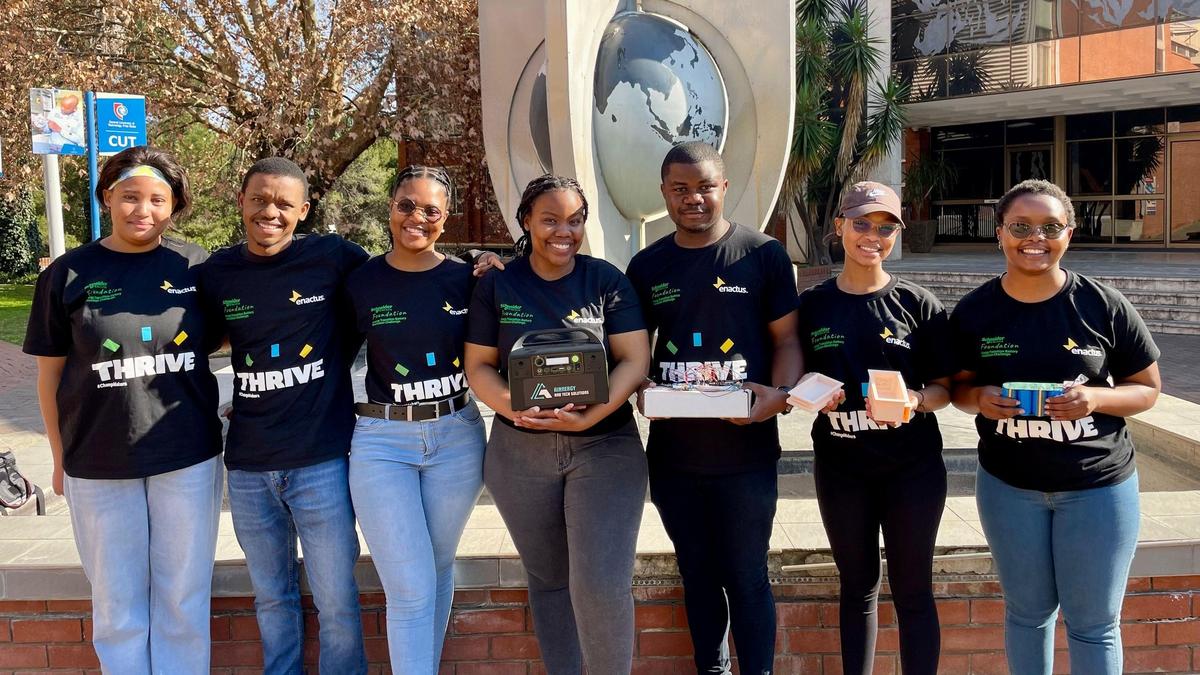
The Schneider Electric Battery Innovation Challenge equipped young people with technical, entrepreneurial and problem-solving skills to address energy challenges in their communities.
Winner of the Team France Business Excellence Award 2026 for Skills Development & Future Talent
Developing the skills needed for the energy transition requires more than technical training. It also calls for innovation, entrepreneurship and the ability to turn ideas into practical solutions. Through its Battery Innovation Challenge, Schneider Electric South Africa, with support from the Schneider Electric Foundation and in partnership with Enactus, gave young people the opportunity to develop these capabilities while addressing energy challenges in their communities.
The initiative, launched in February 2024, was developed in South Africa and expanded across the continent. Between 2024 and 2025, it upskilled 3,794 young people aged 14 to 35 in South Africa and contributed to a total reach of more than 24,000 young people across South Africa, Zimbabwe, Kenya and Nigeria.
The programme earned Schneider Electric South Africa the Skills Development & Future Talent Award at the 2026 Team France Business Excellence Awards. The award recognises its contribution to preparing young people for emerging economic opportunities through practical learning, mentorship and entrepreneurship.
Turning energy challenges into learning opportunities
The Schneider Electric Battery Innovation Challenge was created to help young people develop solutions to local energy needs while building skills relevant to the energy transition.
The initiative originated with an engineer at Schneider Electric South Africa, working with the company’s Corporate Citizenship team. It formed part of the Schneider Electric Foundation’s New Skills for the Future and Innovation initiative, funded by the Foundation and led and managed by Schneider Electric South Africa.
Enactus, an international organisation that supports student-led social entrepreneurship, served as the programme’s implementation partner.
The six-month programme followed five phases: student recruitment and coordination, social entrepreneurship training, project development and implementation, impact measurement and evaluation, and the final competition.
Participants from secondary schools, universities and communities took part in workshops, mentoring sessions, expert-led training and project-based learning. They were challenged to develop battery models and energy solutions that responded to local needs while considering environmental, social and economic outcomes.
Rather than focusing exclusively on classroom learning, the challenge asked participants to identify problems, work with communities and develop solutions with practical applications. This approach connected technical concepts with entrepreneurship and the process of bringing an idea into implementation.
Building skills for the energy transition
The programme addressed several capabilities relevant to South Africa’s future workforce. Participants developed technical, engineering, digital, leadership, project management and problem-solving skills, alongside entrepreneurial thinking.
These capabilities are relevant to an economy facing the need for more resilient energy systems and greater efficiency in the use of resources. By asking participants to work on local energy challenges, the programme also introduced them to the relationship between technology, sustainability and community needs.
Schneider Electric reported that 3,794 young people in South Africa were upskilled through the initiative. Across the four participating countries, the programme reached more than 24,000 young people.
The nomination also recorded that at least six entrepreneurial teams were established in South Africa alone through the challenge, with additional teams established across the other participating countries. Several concepts developed by participants had progressed into operational initiatives or remained under development at the time of the nomination.
These outcomes indicate that the initiative extended beyond skills awareness. It gave participants a framework for applying what they learned to potential projects and ventures, with opportunities to continue developing their ideas after the formal competition.
Expanding access through education and partnerships
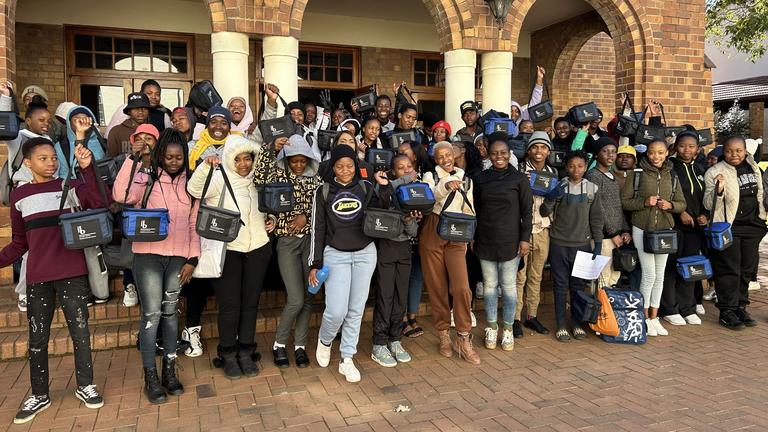
The challenge drew on Enactus’s network to reach young people across different educational settings and communities. Tertiary student teams helped engage learners from at least 20 secondary schools in underserved communities over the two-year period.
This model created opportunities for younger learners to participate in mentorship and innovation-focused projects, supported by students and other programme contributors. It also connected participants with academic professionals, industry experts and business leaders who provided guidance and practical insights.
The partnership brought together several elements of workforce development: technical learning, mentorship, entrepreneurship and exposure to industry. These elements can help young people understand how their skills may translate into further education, employment or entrepreneurial activity.
For Schneider Electric, the programme also provided a way to connect its expertise in energy management and industrial automation with education and community development. The programme encouraged participants to develop entrepreneurial and innovative solutions to emerging energy challenges, creating opportunities for impact beyond traditional employment pathways.
From a South African initiative to a regional programme
One of the programme’s defining features was its expansion beyond its original market. Developed in South Africa, the Battery Innovation Challenge was implemented in Zimbabwe, Kenya and Nigeria. The nomination also records subsequent expansion into Egypt.
This growth demonstrated the potential to apply a locally developed youth skills initiative across different African contexts. While energy challenges and community needs vary between countries, the programme’s emphasis on practical problem-solving, entrepreneurship and sustainability offered a model that could be adapted to different settings.
The initiative also reflected cooperation between Schneider Electric South Africa, the Schneider Electric Foundation in France, Enactus, educational institutions, industry experts and participating communities. The Foundation’s support connected the local programme to Schneider Electric’s wider commitment to developing skills for the future.
The cross-border model is relevant to the wider France–South Africa business relationship. It shows how expertise, funding and partnerships can support skills development while addressing economic and environmental priorities that extend beyond national borders.
Why Schneider Electric won the award
The Skills Development & Future Talent Award recognises organisations that make a measurable contribution to South Africa’s future workforce through education, training, youth employability and long-term career opportunities.
Schneider Electric South Africa’s nomination presented evidence of scale, practical learning and regional expansion. The Battery Innovation Challenge upskilled 3,794 young people in South Africa and reached more than 24,000 in total across four African countries. It developed technical and entrepreneurial capabilities, created opportunities for learners in underserved communities and supported the establishment of at least six entrepreneurial teams in South Africa alone, with additional teams established across the other participating countries.
The initiative also demonstrated how skills development can connect education with wider economic and environmental priorities. By asking young people to develop solutions to energy challenges, it linked workforce preparation with innovation and the transition towards more sustainable energy systems.
As the winner of the 2026 Skills Development & Future Talent Award, Schneider Electric South Africa provides an example of how a locally developed initiative can build practical skills, encourage entrepreneurship and expand opportunities for young people. Its Battery Innovation Challenge illustrates how investment in future talent can deliver both meaningful individual development and scalable innovations that help address the energy challenges facing South Africa and the wider region.